From April 14 to 15, 2026, the 5th China Data Center Liquid Cooling Industry Summit & Exhibition was held at the Shanghai Fuyue Hotel. This summit focused on the large-scale commercial application of liquid cooling technology, with in-depth discussions on the evolution of cold-plate and immersion cooling technology routes, breakthroughs in key components (such as CDUs and coolants), and the integrated design of AI server liquid cooling systems. The event attracted numerous companies from across the data center, AI computing infrastructure, and liquid cooling equipment manufacturing industry chains. AUDIOWELL presented its series of products for cloud computing thermal management – including vortex flow sensors, clamp�on flow sensors, and ultrasonic flow sensors – drawing widespread attention from professional attendees.
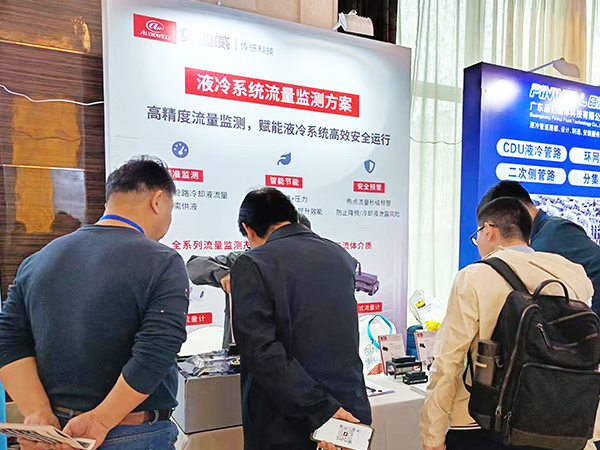
Liquid Cooling Metering Moves Toward Precision: Sensors Replace Instrument-Grade Products
With the widespread adoption of high-computing-power chips such as the NVIDIA H100 – where single-chip power consumption exceeding 700W and AI server rack power exceeding 30kW have become common – traditional air cooling is facing performance bottlenecks, and full liquid cooling technology is rapidly becoming the industry standard. However, the risk of liquid cooling systems lies in their “invisibility.” In multi-branch pipelines, coolant flow must be precisely controlled: insufficient flow can cause chips to overheat and fail within seconds, while excessive flow wastes power and energy. Previously, the industry relied on instrument-grade flow sensors to address this issue, but they are expensive. AUDIOWELL has replaced instruments with sensors, launching a series of dedicated flow sensors for AI server liquid cooling thermal management. By replacing the traditional industrial-grade flow sensor main�loop monitoring mode with “main loop + branch loop” monitoring, these sensors enable more precise flow and temperature control in liquid cooling systems, providing a cost-effective flow measurement solution for data centers.
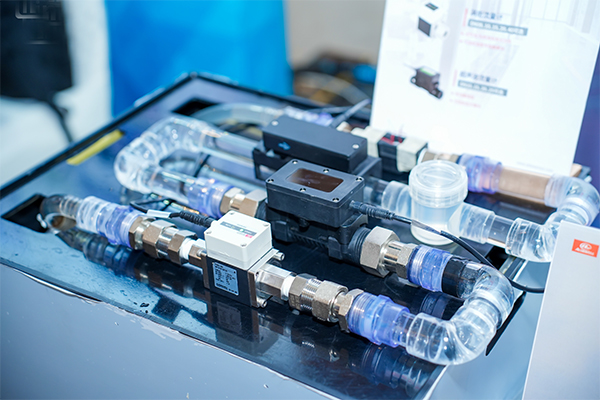
Vortex Flow Sensor: The “Sentinel” of the Liquid Cooling Main Pipe
In the main pipes of liquid cooling systems for AI server clusters, AUDIOWELL’s vortex flow sensor, with its excellent resistance to bubbles and impurities, stably monitors the total coolant flow, ensuring accurate and reliable data. The vortex flow sensor features algorithm optimizations specifically for bubble interference – a common issue in liquid cooling systems – maintaining high measurement accuracy of ±3% F.S. even under complex gas-liquid mixed conditions. Its modular, compact design and low pressure loss help reduce pumping energy consumption in the system. Real-time flow monitoring ensures stable and efficient operation of the thermal management system, acting like a “sentinel” for the liquid cooling system, monitoring main�loop flow in real time and helping data centers keep computing power chips “cool” under stringent PUE requirements.
Clamp-On Flow Sensor: Non-Destructive Installation on Branch Lines, Smarter Predictive Maintenance
In the liquid cooling thermal management systems of AI server clusters, the clamp-on flow sensor can be installed non-destructively on branch lines without cutting pipes, monitoring coolant flow in real time. A standard 8-GPU AI server corresponds to eight independent liquid cooling branch lines, each requiring precise metering. The clamp-on flow sensor can be applied to any branch line cooling pipe. Its abnormal alarm function promptly alerts users to flow imbalance or blockage risks, ensuring uniform coolant distribution to each heat-generating node. This enables reliable system monitoring and predictive maintenance, providing strong support for the refined operation and maintenance of liquid cooling systems.
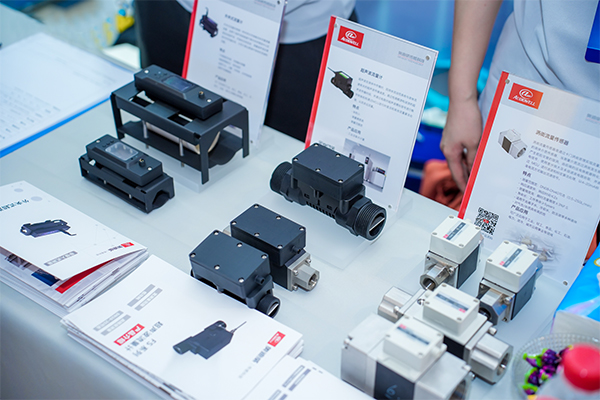
Ultrasonic Flow Sensor: Long Life with No Moving Parts, Micro-Flow Leak Detection to Prevent Problems Before They Occur
In AI server liquid cooling thermal management systems, AUDIOWELL’s ultrasonic flow sensor uses ultrasonic sensing technology to monitor coolant flow velocity and cumulative flow in real time. With no moving parts, it eliminates wear risks, ensuring long�term reliable operation. From an operation and maintenance perspective, its micro�flow leak detection function can promptly identify pipe leakage, preventing problems before they occur. In addition, the product supports multi�module expansion to evaluate changes in coolant quality, ensuring that the thermal management system continuously and efficiently dissipates heat for high�density computing equipment.




 Focus on us