In industries such as industrial manufacturing, energy measurement, and medical equipment, accurate measurement of gas flow is of great significance for process control, energy efficiency management, and safe operation. Traditional flow sensing technologies are susceptible to environmental interference such as mechanical vibration and temperature changes, and face limitations in measurement accuracy and stability under very low flow rates or low-velocity flow conditions.
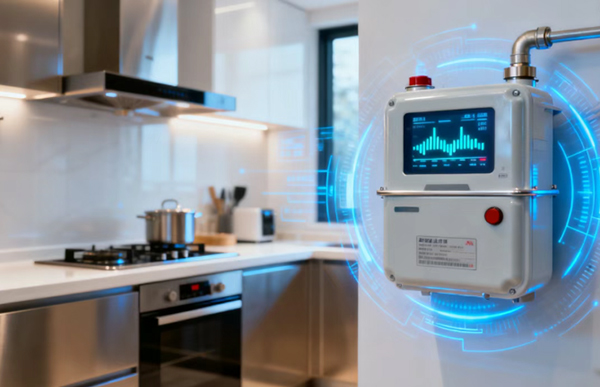
Furthermore, with the increasing demand for device miniaturization and integration, traditional sensors struggle to achieve high accuracy and stability in flow measurement within limited spaces.
MEMS Miniaturization
The Technological Foundation of Highly Integrated Structures
Audiowell's ultrasonic gas flow sensors utilizing advanced MEMS technology have emerged. The core breakthrough of the product stems from the deep application of MEMS processes, achieving extreme miniaturization and high integration of the sensor unit.
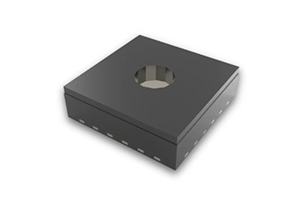
MEMS Ultrasonic Gas Flow Sensor
Volume reduced by over 190 times:
The sensor dimensions are merely 2.8x2.8x1 mm (volume approx. 7.84 mm³), compared to a conventional ultrasonic sensor's typical diameter of 16 mm and height of 12 mm (volume over 1500 mm³). This represents a volume reduction of over 190 times. This ultra-miniaturized design perfectly meets the stringent requirements of space-sensitive applications such as smart gas meters, portable detection equipment, and embedded instruments.
Integrated with PCB:
The MEMS process ensures the consistency and repeatability of the sensor's core components, providing a reliable foundation for large-scale deployment. The product can be integrated directly onto the PCB, while significantly reducing production costs and power consumption.
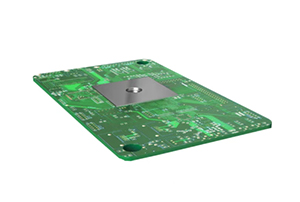
MEMS Ultrasonic Gas Flow Sensor Integrated with PCB Reference Diagram
dTOF Measurement Method
Enabling Uninterrupted, Precise Measurement
This technology adopts the ultrasonic differential Time of Flight (dTOF) principle. By measuring the time difference of ultrasonic wave propagation upstream and downstream within the gas flow, it directly calculates the gas velocity. This fundamentally avoids the wear and drift issues associated with mechanical meters.
No moving parts, ensuring authenticity and accuracy:
The dTOF method is an indirect measurement technique, requiring no moving parts. This ensures the flow channel remains completely unobstructed without altering the flow field distribution, thereby maintaining the authenticity of the original flow state.
Schematic Diagram of dTOF Measurement Principle
Unaffected by gas composition or concentration:
Measurement accuracy is not affected by changes in gas composition or concentration. It is suitable for various gas media (such as natural gas, fuel gas, hydrogen, and other special gases), ensuring broad applicability and stability of data.
450kHz High Frequency and Horn Design
Empowering Micro-Flow Perception
Building upon miniaturization, the product achieves exceptional performance in micro-flow scenarios through the combination of a 450kHz resonant frequency and a dedicated horn structure.
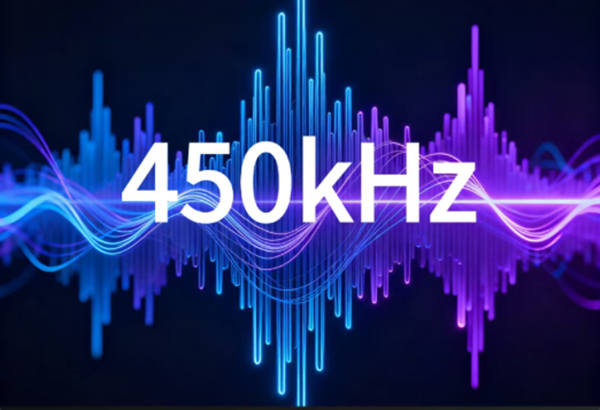
The product emits 405kHz high-frequency sound waves
Capturing nanosecond-level acoustic phase changes:
The 450kHz high-frequency emission generates short-wavelength sound waves, which are highly sensitive to minute vortices and momentum changes in low-velocity flow fields. It can accurately capture acoustic phase changes as low as the nanosecond level, providing a reliable data foundation for gas leak diagnosis.
Special design achieves high signal-to-noise ratio:
Through the focusing of sound waves and constraint of the field of view via the integrated horn, only 30dB gain is required in air medium to achieve full amplitude output. This design significantly enhances the signal-to-noise ratio, making it particularly suitable for environments with small pipe diameters (below DN15), and addressing the pain point of signal attenuation in traditional sensors under low flow conditions.
Application Scenarios
Leading a New Era of Precision Measurement
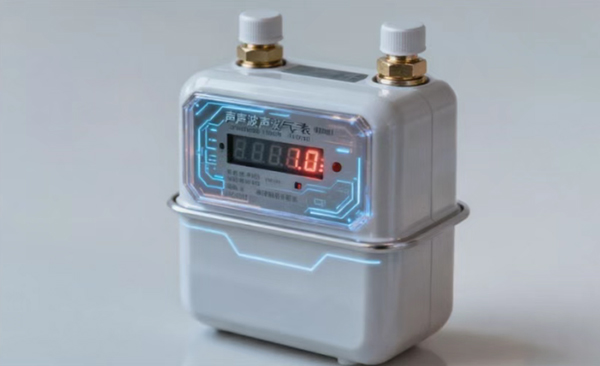
Ultrasonic Gas Meters
Enable high-accuracy, long-life residential and industrial gas metering, featuring advantages such as vibration resistance, tamper prevention, and low power consumption.
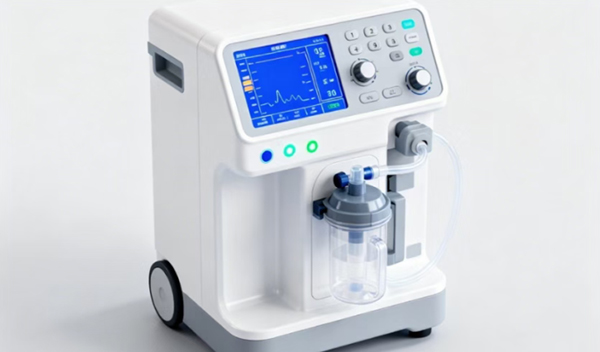
Medical Equipment Gas Flow Monitoring
Suitable for stable, sterile, and reliable measurement of gas flow in medical devices such as ventilators and anesthesia machines.
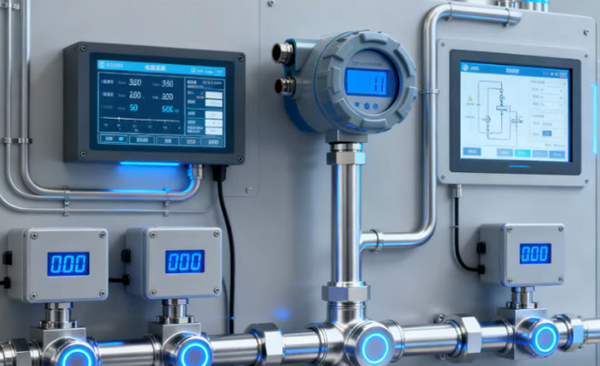
Industrial Manufacturing Gas Measurement
Used for precise monitoring and control of process gases, specialty gases, and emission gases in industries such as chemicals and semiconductors.




 Focus on us