The "Last Meter" Safety Hazard in Robotics
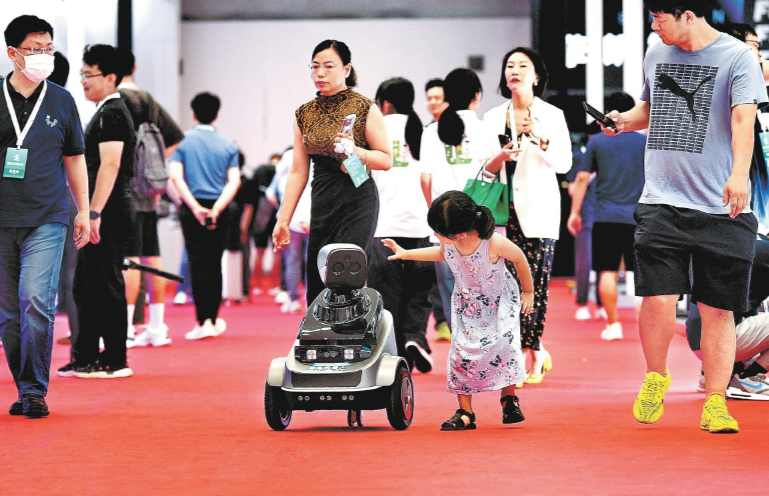
In June 2026, the world’s premier robotics conference, ICRA, was held in Vienna, Austria, where researchers and enterprises from around the globe showcased the latest breakthroughs in robotics. Around the same time, a large number of home companion robots and commercial service robots made their collective debut at the 2026 World Robot Conference. The robotics industry is accelerating its transition from exhibition halls to real�world complex scenarios such as homes, shopping malls, and hotels. However, a fundamental problem is increasingly being recognised: the one metre perimeter immediately around a robot – the “close quarters safety zone” – remains a blind spot for most existing sensing solutions. A 360° rotating LiDAR is designed for far field scanning but leaves a near field blind circle around the robot; a head�mounted camera’s field of view can be obstructed by the robot’s own body and also suffers from a minimum sensing distance.
A consensus is emerging across the industry: robots can “see far ahead” but often fail to “guard the space right beside them.” In home environments, soft, low�profile obstacles such as curtains, slippers, and charging cables, as well as transparent glass fixtures, are easily missed; in low light, backlit, or highly reflective conditions, vision based recognition fails; LiDAR has an inherent near field blind zone; and in crowded commercial spaces, moving pedestrians and temporary clutter frequently create collision risks. Near field safety perception has become a critical bottleneck limiting the large scale deployment of companion and service robots.
Multi Sensor Fusion Has Become a Definitive Trend
No single sensor can cope with unstructured, complex real�world scenarios. Industry data confirm this trend: in the high�end commercial service robot segment, the adoption rate of multi�modal fusion solutions combining LiDAR and vision has already reached nearly 65%, and is expected to exceed 85% by 2030. The LiDAR + vision + ultrasonic multi sensor fusion pathway has become an industry accepted certainty.
In February 2025, the new versions of ISO 10218 1:2025 and ISO 10218�2:2025 were officially published – the first major revisions to this series since 2011, integrating the collaborative robot safety specification ISO/TS 15066. The new standards explicitly define collision detection as a safety�related control function, requiring that a robot must trigger a protective stop within a specified time limit when an unexpected contact is detected. The EU’s new Machinery Regulation (EU) 2023/1230 will become mandatory on 20 January 2027. In early 2026, the US OSHA updated its technical manual chapter on industrial robot system safety. Using deterministic ranging to safeguard the human robot separation distance is becoming a clear regulatory and technical direction.
Against the backdrop of increasingly stringent safety standards and more complex application scenarios, the value of ultrasonic sensors is being reassessed by the global market.
Comparison of Mainstream Ranging and Obstacle Avoidance Solutions
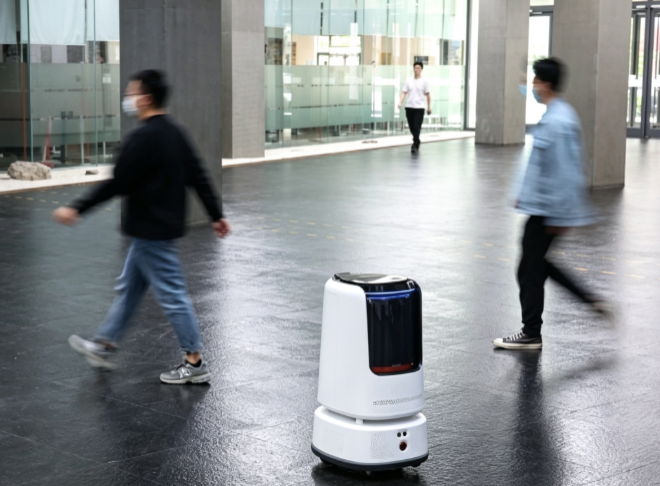
Each of the current mainstream ranging and obstacle avoidance solutions has its own strengths and weaknesses, and no single technology can cover all scenario requirements:
Sensor Type | Ultrasonic Ranging Sensor (Our Product) | LiDAR | Vision Camera | Infrared Ranging |
Environmental Adaptability | Excellent – immune to light, dust, and temperature variations | Moderate – susceptible to strong light and dust interference | Poor – reliant on lighting; fails in low light/backlit conditions | Weak – susceptible to interference at short range |
Soft Obstacle Recognition | High accuracy recognition | Low recognition accuracy | Prone to false positives and missed detections | Cannot accurately recognise soft obstacles |
Cost | Very cost effective – suitable for mass production | High cost – high barrier to mass production | High algorithmic cost – complex tuning | Low cost but poor accuracy |
Integration Complexity | Low – plug�and�play, adaptable to all robots | High – requires complex algorithm adaptation | Very high – requires substantial imaging compute power | Low, but with poor stability |
Typical Applications | Full coverage for home companion and commercial service robots | High precision industrial scenarios | Fixed point recognition and high resolution imaging | Simple short range proximity sensing |
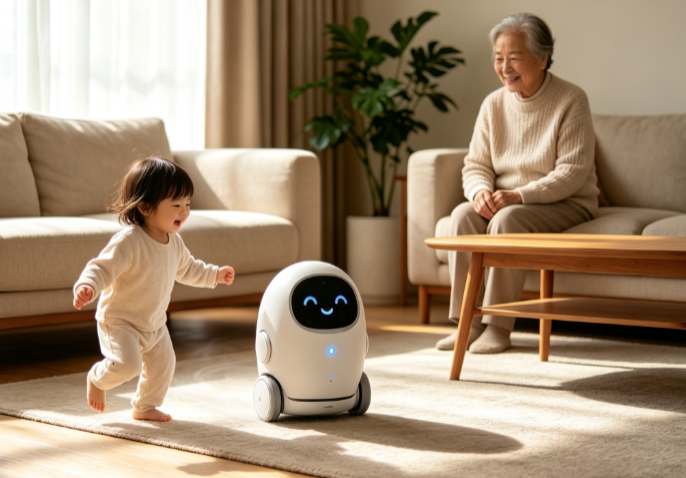
The unique value proposition of ultrasonic sensors lies in their independence from lighting conditions – they are immune to strong light, darkness, and dust, enabling 24/7 stable operation. They can accurately recognise soft obstacles such as curtains, fabrics, slippers, and even glass, while posing no laser�related safety hazards and no privacy concerns – making them naturally suitable for environments with children, the elderly, and crowded commercial spaces.
In 2026, the global market for robotic ultrasonic sensors surpassed USD 4.28 billion, representing a year�on�year growth of approximately 17.3%. In the first quarter of 2026, MEMS�based ultrasonic transducers (CMUTs) achieved their first commercial breakthrough. MEMS technology has reduced sensor volume to 30% of that of traditional products, cut power consumption by 45%, while maintaining centimetre�level accuracy. Technology is making ultrasonic sensors smaller, lighter, and smarter.
Ultrasonic Ranging Sensors – Custom Designed for Mobile Robots
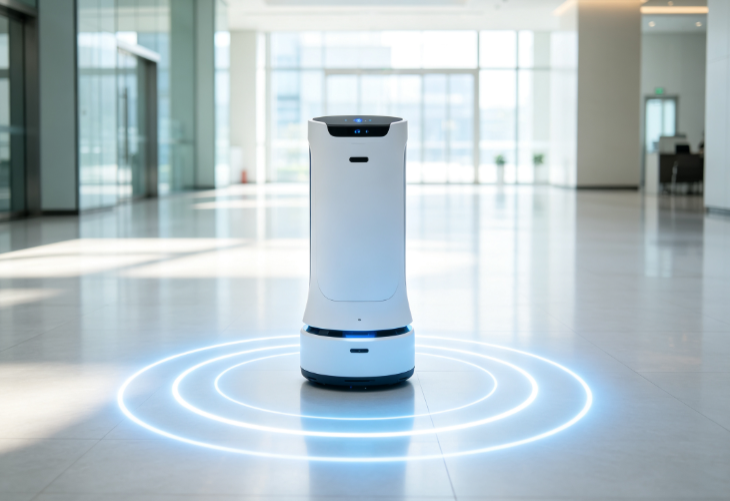
Addressing the pain points of home companion and commercial service robots, we introduce our ultrasonic ranging sensor product line, specifically engineered for mobile robot platforms.
Key Specifications
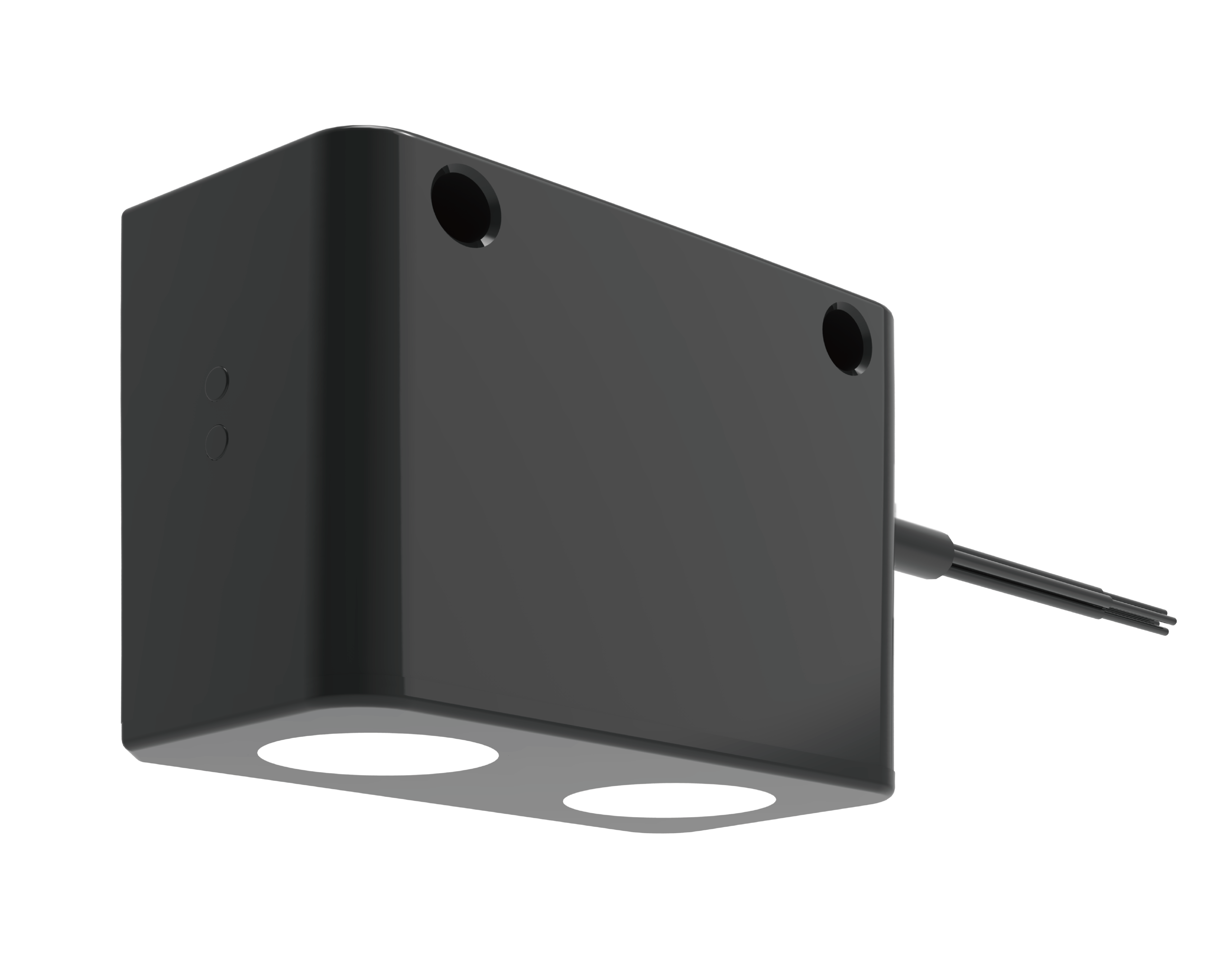
Parameter | Value |
Operating frequency (kHz) | 60 ± 2 |
Detection range (cm) | 3 – 150 |
Communication interface | UART (serial) |
Baud rate (bps) | 115200 |
Start�up time (s) | ≤ 1 |
Refresh rate (Hz) | ≤ 20 |
Operating voltage (V) | 5 ± 0.3 |
Operating current (mA) | ≤ 40 |
Operating temperature (°C) | –10 to +50 |
Storage temperature (°C) | –20 to +70 |
Ingress protection | IP67 |
Material | RoHS compliant |
Core Features
l Ultra�small blind zone – ranging from 2 cm to 2 m
l Customisable beam angle – supports single�element or multi�element array configurations
l Unaffected by strong light, darkness, or dust – stable operation around the clock
l Accurate recognition of soft and hard obstacles – curtains, fabrics, slippers, glass, walls, etc.
l Low power consumption and lightweight design – low energy footprint, easy integration, significantly shortening R&D and debugging cycles for robot manufacturers
l Acoustic based sensing – no laser radiation, no privacy intrusion, suitable for family environments with children and the elderly, as well as commercial spaces
Close Quarters Safety “Failsafe” Layer
Within a complete multi�sensor fusion architecture, our ultrasonic sensors serve as the close quarters safety failsafe, complementing LiDAR and vision systems to form a “long range navigation + short range protection” holistic perception framework.
This is not a “replacement” solution, but a complementary one. It is more than just a sensor – it introduces a new safety layer for the robot.
Closing Statement
For home companion robots and commercial service robots to truly achieve large�scale real world deployment, close quarters safety capabilities for human robot coexistence are indispensable. No single sensor can handle the unstructured complexity of real environments. The LiDAR + vision + ultrasonic multi�sensor fusion route has become an industry�wide certainty.
Our ultrasonic ranging sensors are dedicated to bridging the near field perception gap in robotics, providing highly reliable, cost�effective short range obstacle avoidance solutions for home companion and commercial service robots – ensuring that intelligent robots can safely and smoothly enter thousands of households and diverse commercial spaces.




 Focus on us