Non-Invasive Ultrasonic Flow Sensing for AI Infrastructure and Industrial Cooling
The CDU is running. The pump is circulating. Supply and return temperatures at the main loop look normal. Yet several GPUs in one rack have already begun to throttle. The pump has not failed. The cold plate is not fouled. A flow imbalance in one branch line is simply invisible to the instrumentation you have.
Finding it conventionally means cutting the pipe, draining the loop, welding, and shutting down the branch. For a facility carrying millions of dollars of AI compute, that is not maintenance. It is an outage with a maintenance excuse.
The instrument you need should not require you to break the system it is meant to protect. That is the engineering premise behind clamp-on ultrasonic flow measurement.

Measurement Principle: Transit-Time Sensing from Outside the Pipe
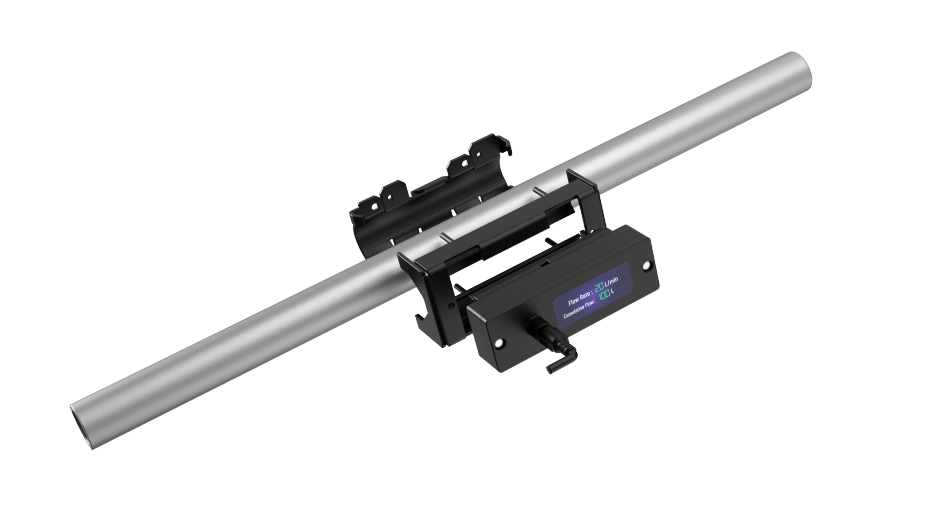
A pair of ultrasonic transducers clamp onto the external wall of the pipe and alternately transmit and receive acoustic signals. Ultrasound travels faster with the flow and slower against it. The system resolves the minute transit-time difference, combines it with pipe inner diameter and material sound velocity, and derives flow velocity—then instantaneous and cumulative flow.
The sensor never enters the pipe. The acoustic path passes through the wall. There are no wetted parts, no process penetration, and no new leak path. The measurement itself does not alter the system being measured.
This is not an improvement to an inline meter. It is a different answer to a different question: how do you make flow visible in a loop you cannot afford to open?
Why Now: Liquid Cooling Is Default, and Regulation Makes Measurement Mandatory
AI rack densities have pushed liquid cooling from an early-adopter choice to the baseline architecture for high-density compute. H100-class chips exceed 700 W per device, and AI server racks surpass 30 kW. Full liquid cooling has become the industry standard for new AI infrastructure. In this architecture, flow is not a secondary process variable. It is the control variable that determines stable compute or thermal failure.
The core risk of liquid cooling is invisibility. In a multi-branch manifold, insufficient flow can overheat a chip within seconds; excessive flow wastes pump power and erodes cooling efficiency.
Regulation is tightening the frame. The EU Energy Efficiency Directive requires data centers to report PUE and water usage effectiveness from 2026 onward. PUE optimization cannot be based on estimates. Operators need validated flow and thermal data to identify hydraulic imbalance, compare actual performance against targets, and demonstrate compliance. A meter that requires a shutdown to install will not be installed in a live facility. Clamp-on ultrasonic measurement removes that barrier.
Engineering Advantages That Matter in a Live Loop
No pipe cutting, no shutdown, no new leak path. The sensor clamps onto the existing pipe. No pipe modification, no depressurization, no welding.
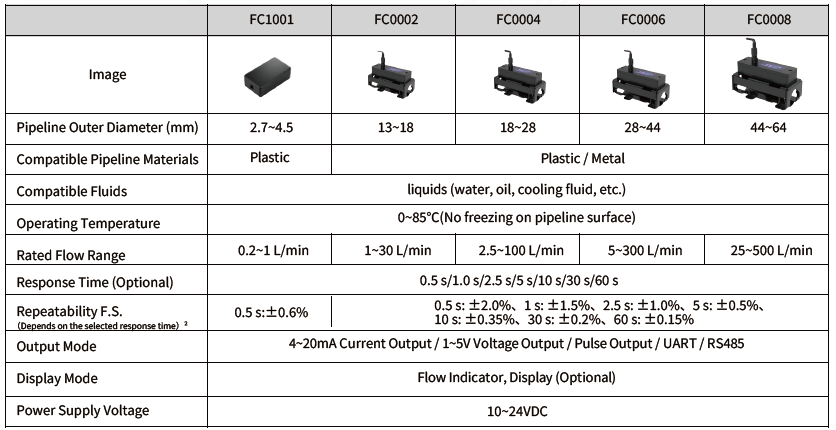
Multi-diameter coverage, down to millimetre-scale micro-channels. One measurement host with different transducers adapts from small branch lines to large industrial mains.
No pressure loss, no consumables, stable 24/7 operation. No impeller, valve core, or obstruction in the flow path. No added pump energy. No moving parts to wear, and no media corrosion or scaling issues.
Compatible with common coolants. Clean water, deionised coolant, and glycol mixtures can all be measured.
Where Clamp-On Flow Meters Belong: The Secondary-Side Branch
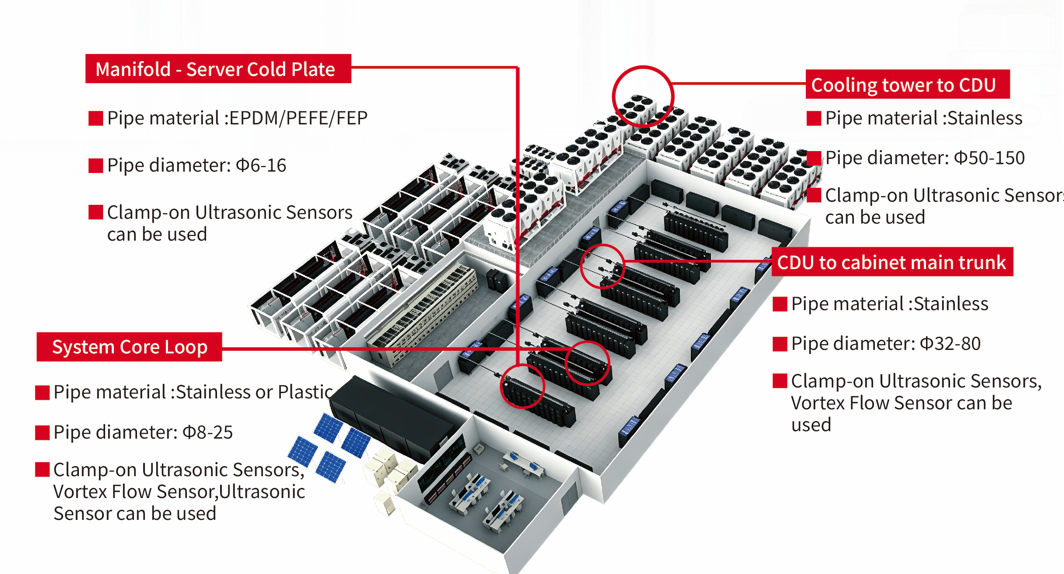
The defining application is AI server liquid cooling, secondary side. A standard 8-GPU AI server corresponds to eight independent liquid cooling branch lines, each requiring precise metering. Instrument-grade inline flow sensors at every branch are costly, and every inline installation adds another penetration point to a loop that must not leak.
Clamp-on flow measurement shifts the monitoring architecture from main-loop-only to main-loop-plus-branch. It delivers branch-level flow visibility without adding wetted parts or shutdown cost. Data feeds directly into CDU control, BMS/SCADA, and predictive maintenance logic: a branch imbalance triggers an alarm before a cold plate overheats; a branch deviation becomes a service ticket rather than a GPU throttle event.
The same logic applies to industrial cooling circuits—process cooling water, HVAC hydronic systems, and clean-fluid production lines—where the choice is often between an invasive retrofit and no measurement at all. Clamp-on ultrasonic measurement turns the retrofit from a shutdown project into a two-to-five-minute installation.
Market Momentum: Branch-Level Visibility Is Being Validated
Clamp-on ultrasonic flow meters are no longer a niche alternative waiting for market education. In 2026, mainstream instrument vendors are entering this segment with a consistent product narrative.
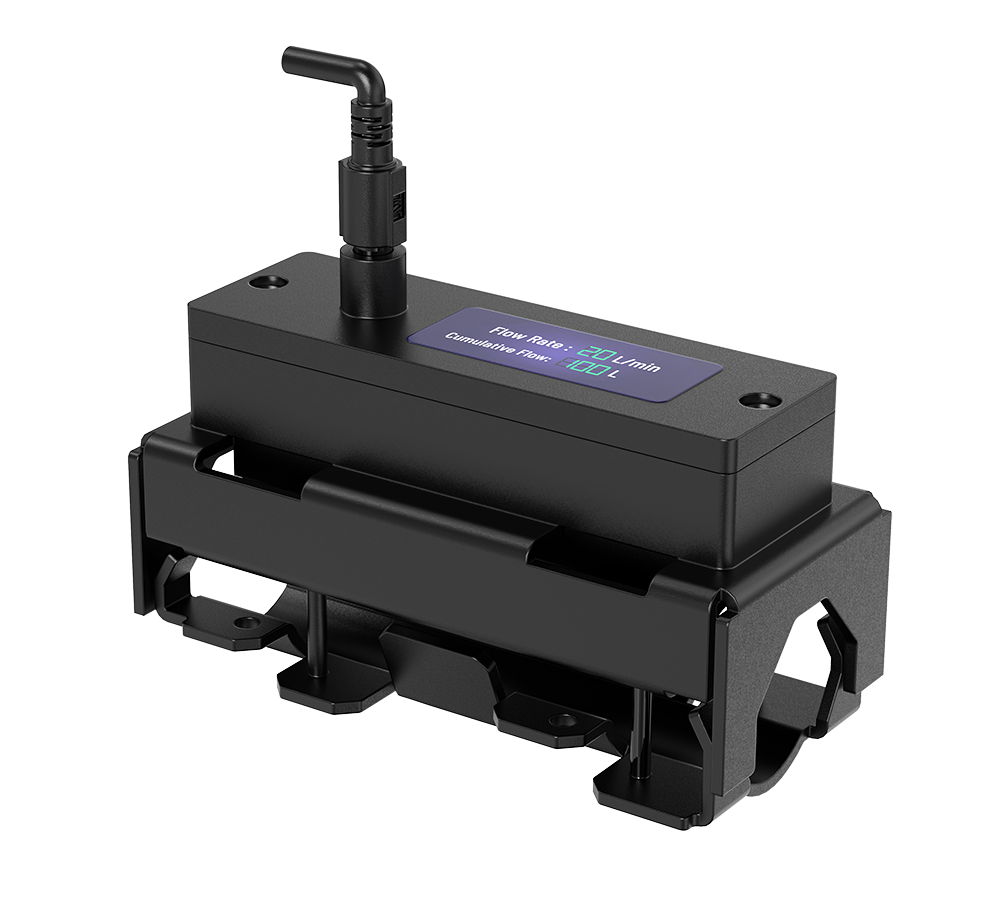
AUDIOWELL has taken the branch-line logic furthest. Its clamp-on flow sensor is designed for non-destructive installation directly on AI server liquid cooling branch lines, providing real-time coolant flow monitoring and abnormal alarms for flow imbalance or blockage risk. The product has entered the systems of leading CDU manufacturers, and the company explicitly positions it as a “main-line + branch-line” architecture rather than a replacement for main-loop meters. Its liquid-cooling flow sensor portfolio received industry recognition in 2026, reflecting how seriously the liquid cooling supply chain now treats branch-level flow visibility.
Not a Replacement, but an Enabler
Clamp-on ultrasonic flow measurement is not a universal substitute for every flow instrument. Its value is concentrated where invasive measurement is operationally or economically unacceptable.
It is best suited to branch-level monitoring in live liquid cooling loops, retrofit projects on existing pipework, and high-availability facilities where shutdown cost far exceeds the instrument itself.
Liquid cooling is already the default thermal architecture for high-density AI compute. Regulation has made PUE and efficiency reporting a mandatory operating discipline. And the most consequential failures in liquid-cooled facilities often begin as an invisible flow deviation in a branch line—not as a CDU pump failure.
A flow meter that requires you to cut the pipe asks you to accept risk in order to reduce risk. A clamp-on ultrasonic flow meter asks only that you clamp a transducer onto the outside of the pipe and let the acoustic path do the work.
The hidden risk in your liquid cooling loop is not a lack of instrumentation. It is that your existing instrumentation cannot see the branch lines—and the conventional fix costs more uptime than the problem it is meant to solve.
Contact us for clamp-on ultrasonic flow meter specifications, pipe-diameter compatibility data, and evaluation samples for liquid cooling and industrial retrofit applications.




 Focus on us