L2 Autonomous Driving Enters Mass Deployment — Ultrasonic Sensors Can No Longer Be the Weak Link
The penetration rate of Level 2 ADAS has grown rapidly over recent years, with automatic parking, remote controlled parking, and low-speed automatic emergency braking (AEB) becoming standard features on new vehicles. While LiDAR, high-resolution cameras, and 4D millimeter-wave radars have undergone rapid technological advancement, ultrasonic sensors — responsible for near-field hazard detection within the last several meters around vehicles — are often overlooked and have become a critical weak link holding back the entire perception system.
P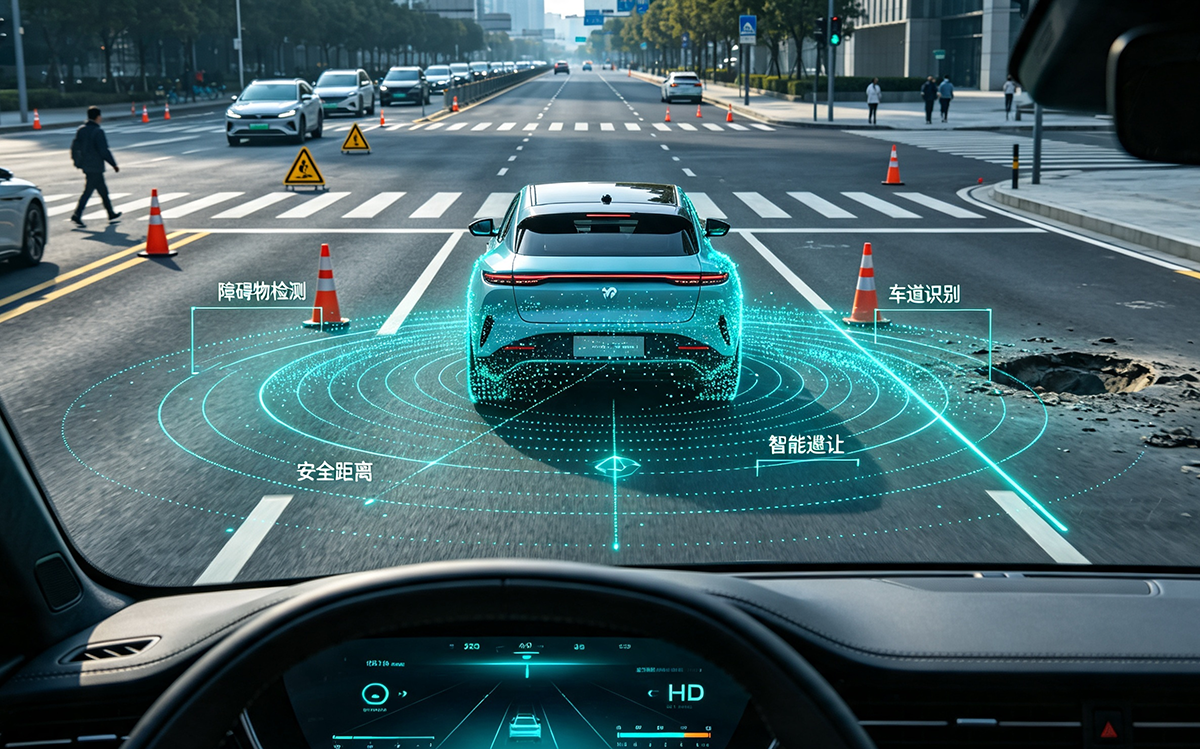
Conventional analog ultrasonic sensors are constrained by four fundamental performance limitations:
Crosstalk-Induced Ringing: When multiple sensors on the same vehicle or in dense surrounding environments operate simultaneously, overlapping fixed-frequency pulses interfere with one another. This generates phantom obstacles and ranging fluctuations, directly reducing parking success rates and eroding user confidence.
Tradeoff Between Detection Range and Blind Zones: Typical operating range spans 20 cm to 450 cm, with a dead zone at ultra-close distances. Meanwhile, these sensors lack sufficient mid-range detection capability required for remote parking and lane-change assist pre-warning.
Poor Environmental Robustness: Heavy rain, road splash, mud, ice, and snow covering sensor transducers severely attenuate echo signals, drastically increasing missed detection rates. This creates tangible safety hazards in harsh operating conditions such as frigid Canadian roadways and unrestricted German motorways.
Limited Information Dimension: These sensors only output binary distance readings (obstacle present/absent). They cannot transmit confidence metrics or target feature data to domain controllers, hindering multi-sensor fusion required for high-level automatic parking and low-speed AEB functions.
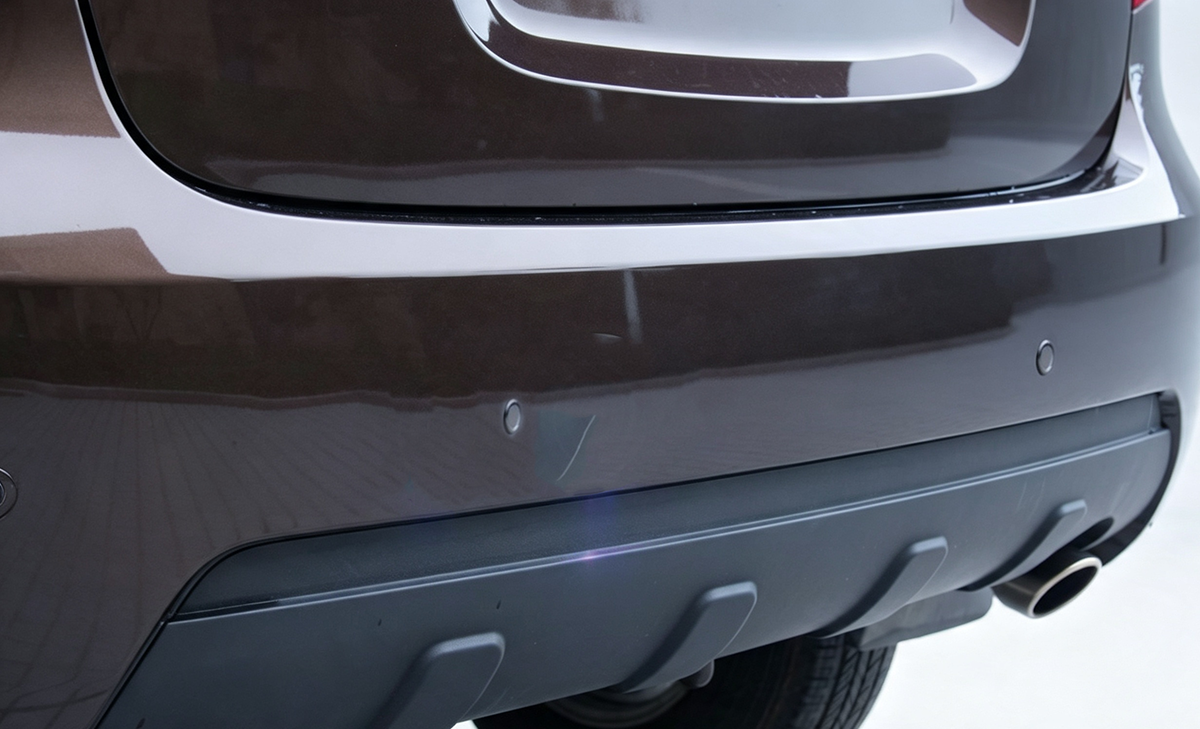
As vehicle intelligence advances to L2+ and even L3 autonomy, ultrasonic sensors demand a fundamental technological transformation — evolving from simple ranging components into compact digital smart radars featuring robust anti-interference performance, wide detection coverage, superior all-weather reliability, and embedded signal processing.
For over two decades, AUDIOWELL has focused on ultrasonic technology research, and developed the AK2 ultrasonic radar through self-developed full-stack independent R&D to deliver this industry-wide technological breakthrough.
AK2 Ultrasonic Sensor: Coded Frequency Modulation Redefines Ultrasonic Perception Capabilities
The AK2 ultrasonic radar is a flagship next-generation product engineered exclusively for L2+ and higher intelligent driving applications. Centered on proprietary coded frequency modulation (CFM) technology and built upon industry-leading dedicated ASIC platforms, it extends maximum detection distance to 6 meters and delivers generational leaps in anti-crosstalk performance, minimized close-range blind zones, and all-climate operational stability.
1. Coded Frequency Modulation: A Unique Digital ID for Every Emitted Pulse
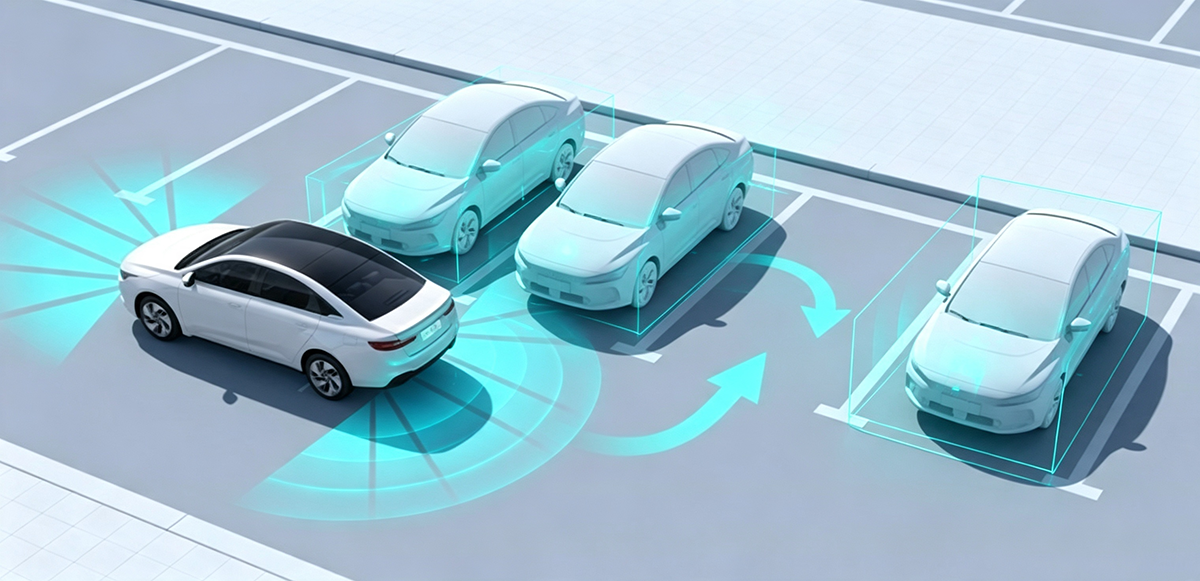
Conventional sensors transmit fixed-frequency pulse bursts, analogous to shouting in a crowded room where signals overlap and become indistinguishable. The AK2 leverages coded frequency modulation: every transducer transmits pulse sequences embedded with exclusive digital encoding, equivalent to assigning a unique digital identity tag to each acoustic signal.
On the receiving side, matched filtering and dedicated decoding algorithms only identify echo signals carrying matching internal codes, fundamentally eliminating multi-sensor crosstalk at the physical signal layer. This delivers two core advantages:
l Up to 12+ vehicle-mounted sensors can operate concurrently at identical frequencies without time-division multiplexing, drastically boosting frame refresh rates.
l Zero false alarms are maintained under intense electromagnetic interference and high acoustic noise, permanently resolving persistent false alert issues in underground parking garages and narrow alleyways.
2. Ultra-Wide Dynamic Range of 15 cm to 600 cm: Full Coverage of All Near-Field Driving Scenarios
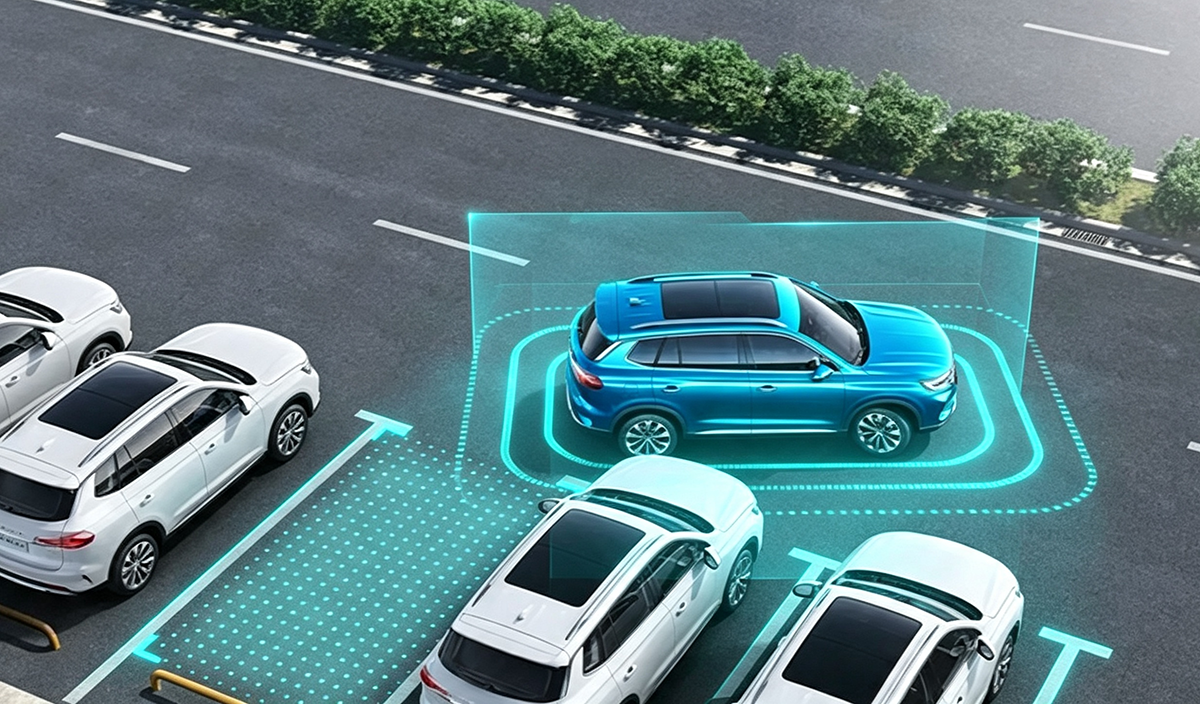
The minimum blind zone is reduced to 15 cm, outperforming the industry standard of 20–30 cm. The radar precisely detects guardrails and parking stoppers in the final centimeters of parking maneuvers to guarantee a high first-attempt success rate for fully automatic parking.
Its maximum effective detection distance reaches 600 cm, marking the first time ultrasonic sensing technology extends reliable coverage into the mid-range domain. This enables extended safety pre-warning perimeters for parking assist systems and significantly enhances the reliability of low-speed lane-change blind-spot detection. Consistent high signal sensitivity is maintained across the entire measuring range, enabling accurate identification of small irregular targets including thin pipes under 4 cm in diameter, low curbs, children, and roadside debris/toys.
3. High-Performance Hardware Backbone: Onsemi NCV75617 / Elmos E524.20 Platform Options
The AK2 integrates sixth-generation automotive-grade ultrasonic dedicated signal processing chips, with two configurable platform options: Onsemi NCV75617 and Elmos E524.20. Each chip embeds high-performance digital signal processing (DSP) cores that support flexible configuration of encoding sequences, time-gain control (TGC), and echo threshold policies, delivering ample hardware acceleration for AUDIOWELL's proprietary Ultrasonic Sensor System (USS) algorithms.
4. Full-Stack Co-Optimization: Synergistic Performance Gains from Transducer to Algorithm
The AK2's core competitive edge does not stem solely from premium off-the-shelf semiconductors, but from deep cross-domain co-optimization spanning piezoelectric ceramic transducers, acoustic mechanical structures, chip platforms, and USS algorithms.
For instance, AUDIOWELL customizes carrier frequencies and modulation schemes tailored to the inherent resonant characteristics of its self-developed transducers. Proprietary acoustic lens structures narrow beamwidth and amplify echo energy at long distances. This accumulated full-stack proprietary know-how places the AK2 far ahead of competing solutions built merely from outsourced component assembly, in terms of detection confidence and anti-interference resilience.
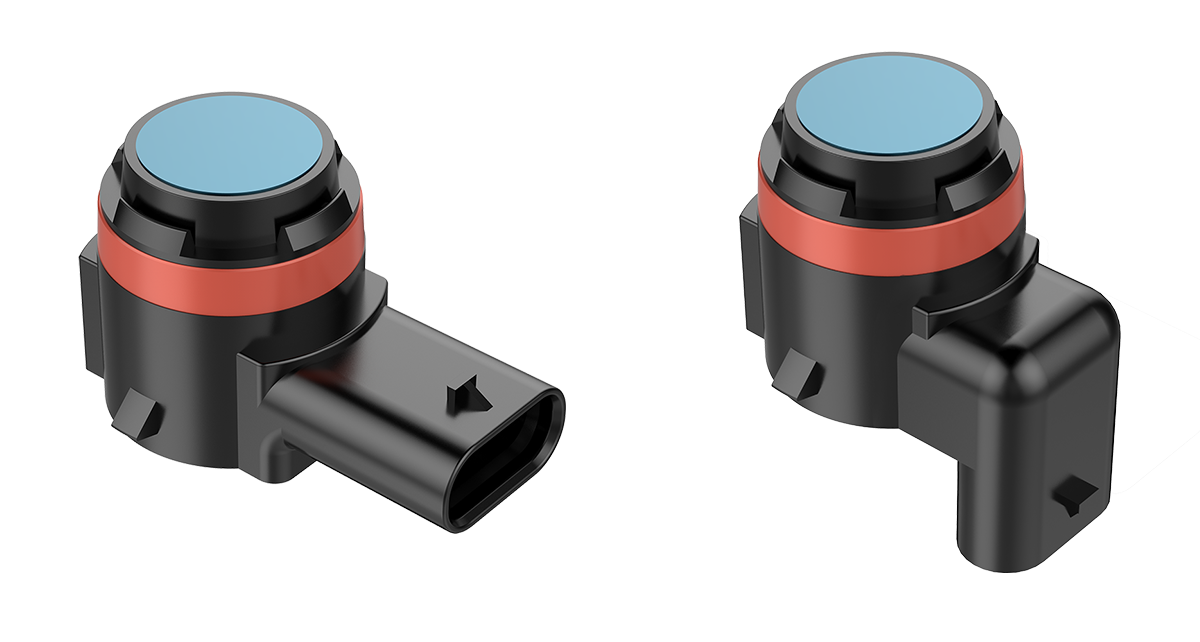
Performance Comparison: AK2 Ultrasonic Sensor vs. Conventional Analog Ultrasonic Sensor
Comparison Metric | Conventional Analog Ultrasonic Radar | AUDIOWELL AK2 Ultrasonic Radar |
Core Technology | Fixed-frequency pulse transmission | Coded frequency modulation digital signaling |
Anti-Crosstalk Capability | Weak performance; multi-sensor time-division operation limits refresh rates | Exceptional interference immunity; simultaneous same-frequency operation for all transducers |
Detection Range | Typical 20 cm – 450 cm | 15 cm – 600 cm, covering ultra-close blind zones through mid-range detection |
Harsh Weather Adaptability | Severe echo attenuation in rain, splash, and mud; high missed detection rate | Coding technology improves SNR and enhances weak echo recognition, drastically lowering missed alerts |
Integration & Calibration | Analog signals prone to interference; calibration highly reliant on technician experience | Digital coded signal interface paired with complete algorithm packages, shortening vehicle adaptation cycles |
Independent Core Technology | Critical components mostly sourced from imported standard parts | Full-stack in-house R&D: piezoelectric ceramics, mechanical structures, perception algorithms, and radar modules fully self-controlled |
Automotive-Grade Quality & Functional Safety Certifications: ISO/TS16949 and ISO 26262 ASIL-B
AUDIOWELL holds ISO/TS16949:2009 automotive quality management system certification. All manufacturing workflows comply with stringent automotive industry standards to guarantee batch consistency, long-term operational reliability, and full lifecycle traceability of the AK2.
Most critically, the AK2's system architecture and complete development workflow comply with ISO 26262 ASIL-B automotive functional safety standards. OEMs and Tier 1 suppliers integrating the AK2 can substantially reduce development costs and engineering workload associated with vehicle-level functional safety compliance.
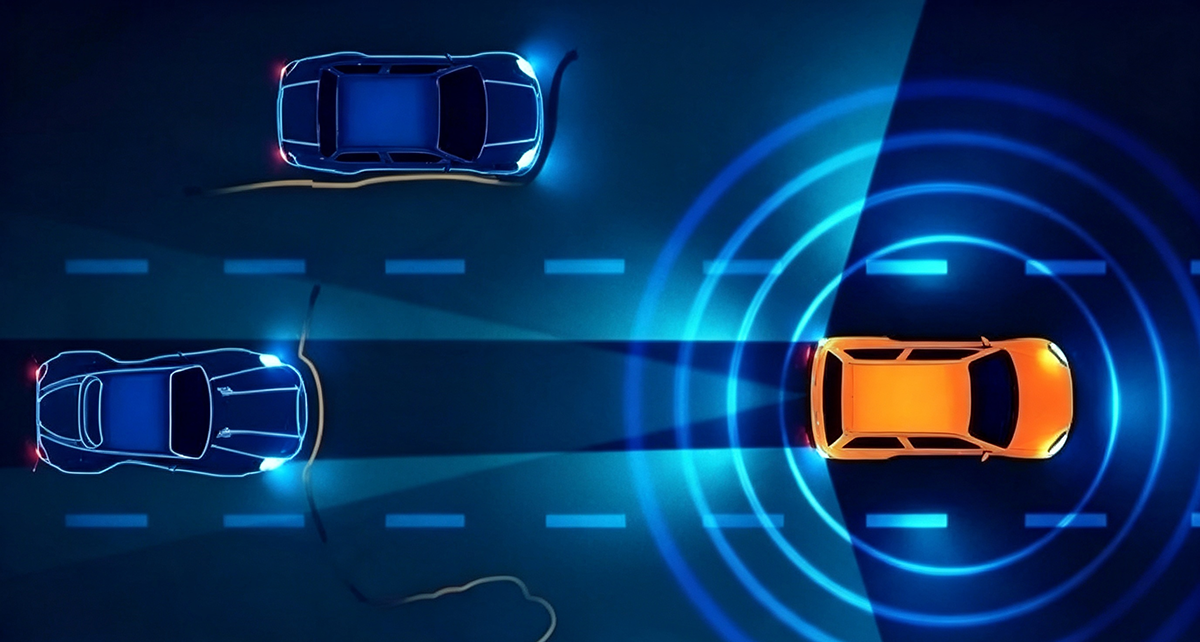
AUDIOWELL: Two Decades of Vertical Ultrasonic Technology Integration Delivers Full-Stack "Radar + Algorithm" Competence
AUDIOWELL specializes exclusively in core ultrasonic technologies and ranks among China's few enterprises achieving end-to-end independent R&D, spanning upstream raw core materials through downstream perception algorithms. We recognize that high-performance automotive ultrasonic sensors rely not only on semiconductors, but on precise synergies between piezoelectric ceramics, acoustic mechanical design, and intelligent signal processing algorithms.
In-House Development & Production of Core Piezoelectric Ceramic Components: All processes — piezoelectric ceramic powder formulation, component high-temperature sintering, and acoustic matching layer coating — are completed on internal production lines. Self-manufactured transducers deliver superior transmit/receive sensitivity, consistent batch performance, and extended service life, providing a clean, high-efficiency acoustic transmit/receive foundation for coded frequency modulation technology.
Precision Custom Acoustic Mechanical Design: In-house development of resonant housing cavities, decoupling noise suppression structures, and beam steering architectures optimizes directional acoustic propagation, suppressing parasitic vibration and environmental noise coupling. Custom transducer housing shapes, exterior finishes, and electrical interfaces are available to match diverse vehicle models and mounting positions.
Independent R&D of Ultrasonic Perception Algorithms: The company maintains a dedicated engineering team specializing in acoustic signal processing and target recognition. Core capabilities include raw echo waveform feature extraction, coded signal matching & decoding, multi-target continuous tracking, and false alert suppression. Our algorithms are not limited to calling chip-integrated DSP functions; they are built upon fundamental acoustic propagation physical models to deliver fully software-definable detection control strategies.
The AK2 is far more than an individual radar transducer. It constitutes a complete perception subsystem comprising radar hardware modules, reference driver firmware, and embeddable USS algorithm packages compatible with vehicle domain controllers. This full-stack technical support enables OEMs and Tier 1 suppliers to accelerate system integration and drastically cut calibration and development timelines.
Partner with AUDIOWELL: Leverage Full-Stack Ultrasonic Expertise to Lay a Robust Foundation for Intelligent Driving Perception
The long-term evolution of intelligent driving depends on consistent, reliable performance from every onboard sensor.
Whether you seek to replace legacy sensor platforms to resolve existing performance gaps, or develop brand-new ultrasonic perception subsystems for next-generation vehicle E/E architectures, AUDIOWELL's vertically integrated capabilities covering core component manufacturing, structural engineering, algorithm support, and safety certification deliver responsive, highly customizable, and cost-effective turnkey solutions.
Pleas press 'MORE' to contact our commercial team to request detailed technical specifications and solution documentation.




 Focus on us